How the Agralink Dashboard Turns Poultry and Swine House Data into Useful Decisions
The Agralink Dashboard monitors temperature, humidity, equipment, water, and feed in poultry and swine houses every 5 minutes, sending real-time alerts over cellular so growers and integrators can catch problems early. From a phone, tablet, or desktop, growers can see every barn at once, with no driving house to house, and turn that data into better daily decisions.
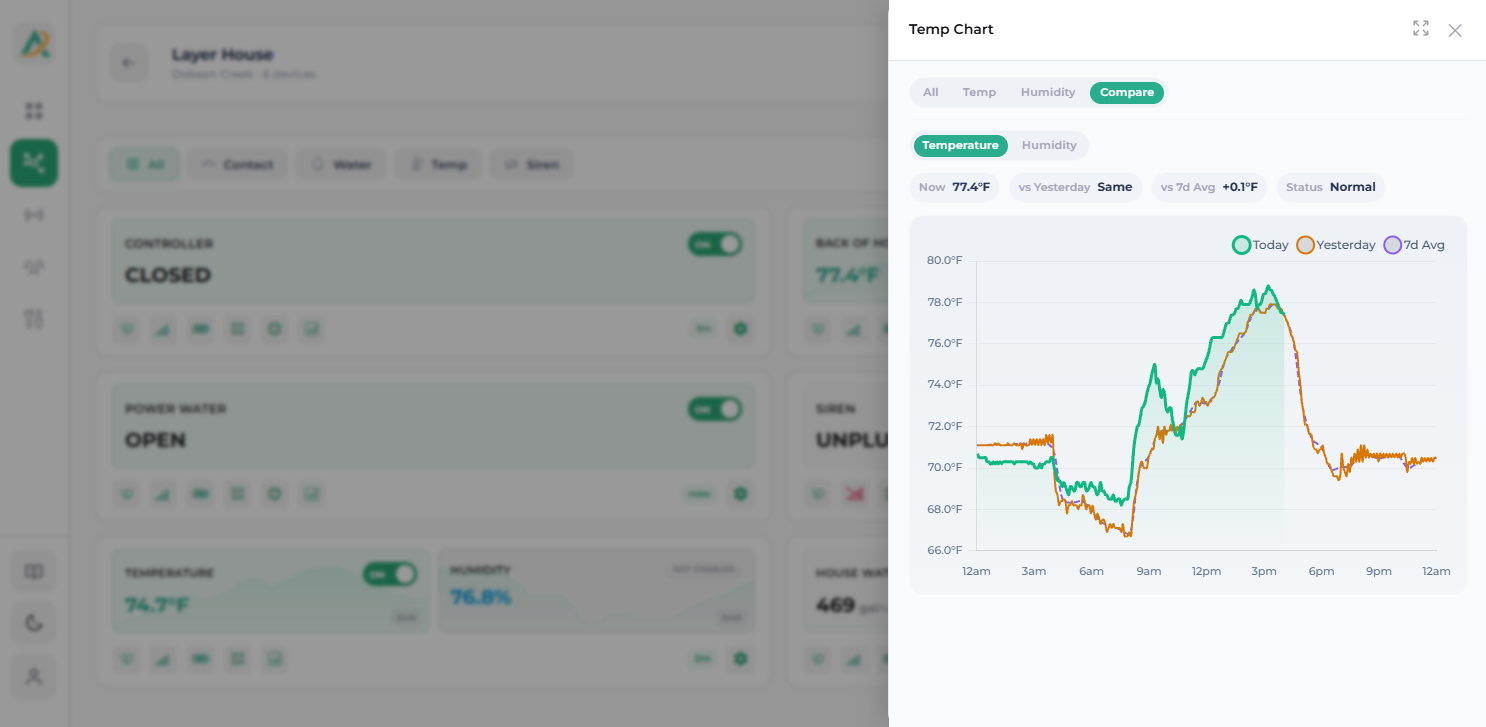
Getting real-time alerts in your poultry and swine house means problems don’t get a chance to grow. The sensors check temperature, humidity, equipment, water, and feed every 5 minutes. That data is then sent over cellular right to the Agralink Dashboard, giving the grower and integrator a clear understanding of any problems.
The Agralink Dashboard is a cloud-based solution where growers can view the activity on their farm right from their mobile phone, tablet, and/or desktop at any time of the day or night. No longer will growers need to drive house to house to read controllers; a grower can open a phone and see every barn at one time.
Let’s discuss how the Agralink Dashboard turns poultry and swine house data into useful decisions that can be applied to your farm each day.
What Does the Agralink Dashboard Deliver?
Think of the Agralink Dashboard as the central repository of all data: the command center for the farm alarm. It gathers every sensor alarm reading and then reports it into a single, easy-to-read screen that works on phones, tablets, and desktop computers. The layout of the screen adapts to whichever device you are using. If you’re on the desktop, you’ll see the full screen. If viewing from the phone, it stacks the information for fast scrolling.
The Agralink system monitors 24/7 and reports a 99.9% uptime, something that is critical for those 2 a.m. storms.
How the Farm Alarm System Works in the Barn
The Agralink Dashboard is only as good as the data feeding it. It all begins with wireless sensors monitoring temperature, humidity, and water, to name a few. All of these sensors are connected to a central gateway. What’s unique to Agralarm is that a single gateway on a farm can watch over several barns. Other farm alarms may need a few to properly monitor the conditions. These are expenses and added equipment the grower doesn’t need.
Sensors That Watch Over the Barn
Temperature and humidity sensors track the two conditions that matter most for animal comfort. Set your own high and low thresholds for the poultry and for the swine.
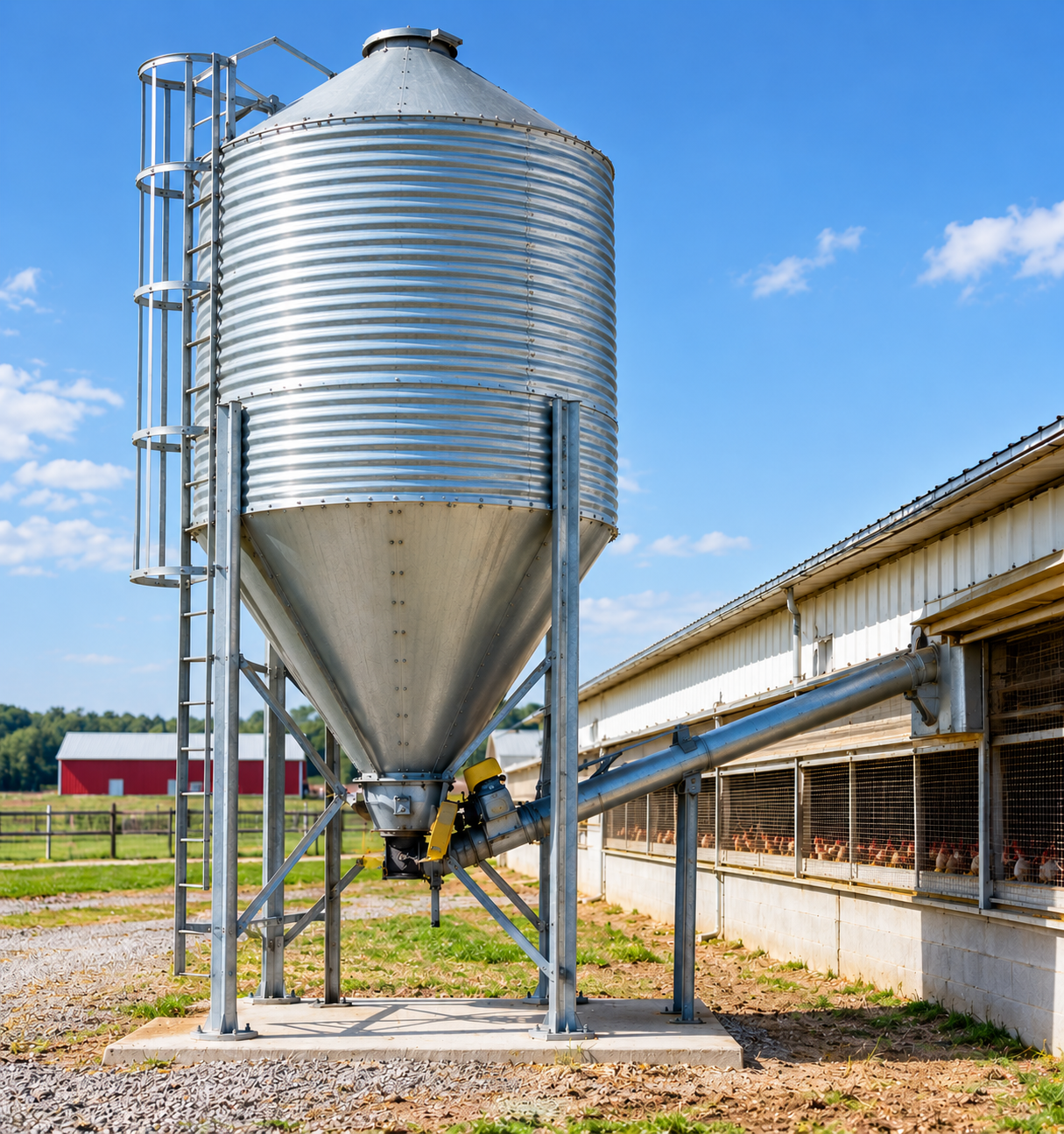
Feed bin sensors use precision LiDAR to read bin levels. They are solar powered and include an integrated wiper that keeps the lens clean. The Dashboard shows each bin as a percentage full along with an estimated weight. If you already have a feed bin solution, that’s great!
Water monitoring connects to existing meters, with up to three meters per sensor. From the Agralink Dashboard, growers can watch the flow and know when it changes.
Equipment monitoring uses up to 3 dry contacts per sensor. These dry contact sensors can track controllers, power status, and relays. Again, a great way to reduce expenses and equipment.
| Sensor Type | What it Measures | What Appears on the Dashboard |
|---|---|---|
| Temperature | Air temperature in each house | Live reading with custom high and low thresholds |
| Humidity | Relative humidity | Live percentage with trend history |
| Equipment | Up to 3 dry contact inputs | Status of controllers, power, and relays |
| Feed Bin | LiDAR level reading | Percent full and estimated pounds |
| Water Meter | Up to 3 existing meters | Remote flow monitoring and trends |
Connecting to Controllers Currently on Your Farm
There are some farms that already have a controller that currently works. Growers would appreciate it if that investment stayed intact. We agree. The Agralink dry contact sensor connects to the alarm relay output on the existing controller.
Agralarm is compatible with Chore-Time, Rotem, Agrivent, Hired Hand, and Cumberland EDGE, along with other controllers that offer a dry contact alarm relay output.
Cellular Connectivity Built for Rural Farms
Rural farms experience problems with the Internet. Agralink uses dual carrier cellular connectivity with high gain antennas designed for remote locations. If ever the power drops, battery backup keeps the monitoring process running. That means the Agralink Dashboard keeps receiving the 5 minute updates without interruption.
How Barn Data Travels into the Agralink Dashboard
If you recall, we discussed that the data travels into the Agralink Dashboard every 5 minutes. The gateway collects the information and sends it over cellular to the Agralink cloud-based Dashboard.
If a reading crosses a threshold, either too high or low, it triggers an alarm. SMS and voice call notifications go out within seconds and are recorded in the Dashboard.
| Step | What Happens | Results |
|---|---|---|
| 1. Sense | Sensors read temperature, humidity, feed, water, and equipment | Location view for each house |
| 2. Collect | The gateway gathers readings through the wireless mesh | Gateway status in System Overview |
| 3. Transmit | Data travels over dual carrier cellular every five minutes | Live values update on any device |
| 4. Alert | Readings outside thresholds trigger SMS and voice calls | Alarm Center with timestamps |
| 5. Record | Every reading is stored for trends and reports | Sensor History and PDF reports |
Agralink Dashboard Information
The Agralink Dashboard shows the health of the farm with gateway connectivity and devices. It answers the question you wonder each day: “Did everything go okay last night?” You’ll have your answer in an instant.
Location Monitoring lets a grower drill down into each poultry or swine house. Get the temperature, humidity, and equipment status when you need it.
The Alarm Center lists active and past alarms with timestamps, locations, and notification status. Managers can see exactly who was contacted and at what time they were contacted.
A great report is the Sensor History. It creates charts that show you patterns over a period of time—a great insight for decision-making on trends.
| Dashboard View | Key Information | Everyday Use |
|---|---|---|
| System Overview | Farm health, gateway status, device counts | Quick morning check of every site |
| Location Monitoring | Live conditions for each house or barn | Fine tuning ventilation and heat |
| Alarm Center | Active and past alarms with timestamps | Reviewing response and follow-up |
| Reports and History | Custom reports and PDF export | Records for integrators and audits |
| Sensor History | Charts and trend analysis | Spotting slow changes over time |
What’s at Risk?
Heat stress is one of the costliest risks for poultry and swine farms. Research by Ohio State University Extension estimates annual heat stress losses in the United States at roughly $128 million to $165 million for poultry and $299 million to $316 million for swine.
| Industry | Estimated Annual Heat Stress Cost in the U.S. |
|---|---|
| Poultry | $128 million to $165 million |
| Swine | $299 million to $316 million |
Source figures from Ohio State University Extension fact sheet AEX 151, Abate Animal Heat Stress in Hot Weather. The same research discusses the importance of checking the fans and ensuring that inlets and doors are positioned for maximum airflow. A connected farm alarm system turns the research into reality. Let’s say, for instance, you have a ventilation issue. You will find out about it in seconds, giving your workers the maximum time to get it fixed before it affects the animals.
Alerts and Call Lists to the Right Person
A poultry and swine alarm system works best when it reaches the right person who can take care of the problem. The Agralink Dashboard lets you build custom call lists for each location. Each contact on the list can choose the way they would like to be contacted: SMS or voice.
This targeted approach keeps phones quiet for people who are off duty and keeps the right workers fully informed.
Reports for Integrators
Many poultry and swine growers work with integrators who expect data. The Agralarm farm alarm system connects to MTech and other software for real-time data sharing.
Managing More than One Farm from the Dashboard
Growing operations can cover several sites. The Agralink Dashboard supports multiple locations, all shown in one view. Multiple users can be added and managed from the same login screen.
Frequently Asked Questions
How often does the Agralink system update the Agralink Dashboard?
The system checks sensor readings every five minutes and sends them over cellular connection to the Agralink Dashboard.
Can the Agralink system work with my current house controller?
Yes. The dry contact sensor connects to the alarm relay output on controllers from Chore-Time, Rotem, Agrivent, Hired Hand, Cumberland EDGE, and others with a dry contact output.
How are alerts delivered?
Alerts arrive by SMS and voice call within seconds when conditions exceed the thresholds you set.
Can I view the Dashboard on my phone?
Yes. The Agralink Dashboard works on mobile phones, tablets, and desktops.
Does monitoring work on battery power?
Yes. When power drops, battery backup keeps monitoring active and the Agralink Dashboard stays current.
Getting Started with the Agralarm Farm Alarm System
The Agralink Dashboard brings the barn, bin, and water line into a single view. For poultry and swine growers, that means faster response, historical records, and a better view of the farm.
Growers can explore the Agralink Dashboard on the Agralarm Dashboard webpage and review the full alarm system on the Agralarm poultry page.
Get a quote or discover your local dealer online or by calling 888.968.2802.
More Articles
Replace Landline with Cellular and Keep Your Farm Alarm System Connected
Copper landlines are being retired and getting pricier. Agralink replaces your landline with dual-carrier cellular, so your existing farm alarm stays connected and supervised 24/7.
Does the Turkey Alarm System Work During Power Outages?
During the change of seasons, you can count on bad weather to wreak havoc on the electrical system with flickering lights and blinking clocks. What happens to the farm alarm system? Does the turkey alarm system work during power outages? The answer is yes.
Feed Bin Monitoring Gives Growers Control Over their Biggest Cost
Let’s focus on feed bin monitoring. It’s one of the largest investments you’ll make on the farm. Wouldn’t you like to maximize those costs so nothing goes to waste? So we’re all on the same page, let’s first discuss what feed bin monitoring is.
Learn More About Agralink
See how Agralink's smart farm technology can support your operation.