Why Growers Who Build Their Own Poultry and Swine Alarm Systems Are Ahead of the Curve
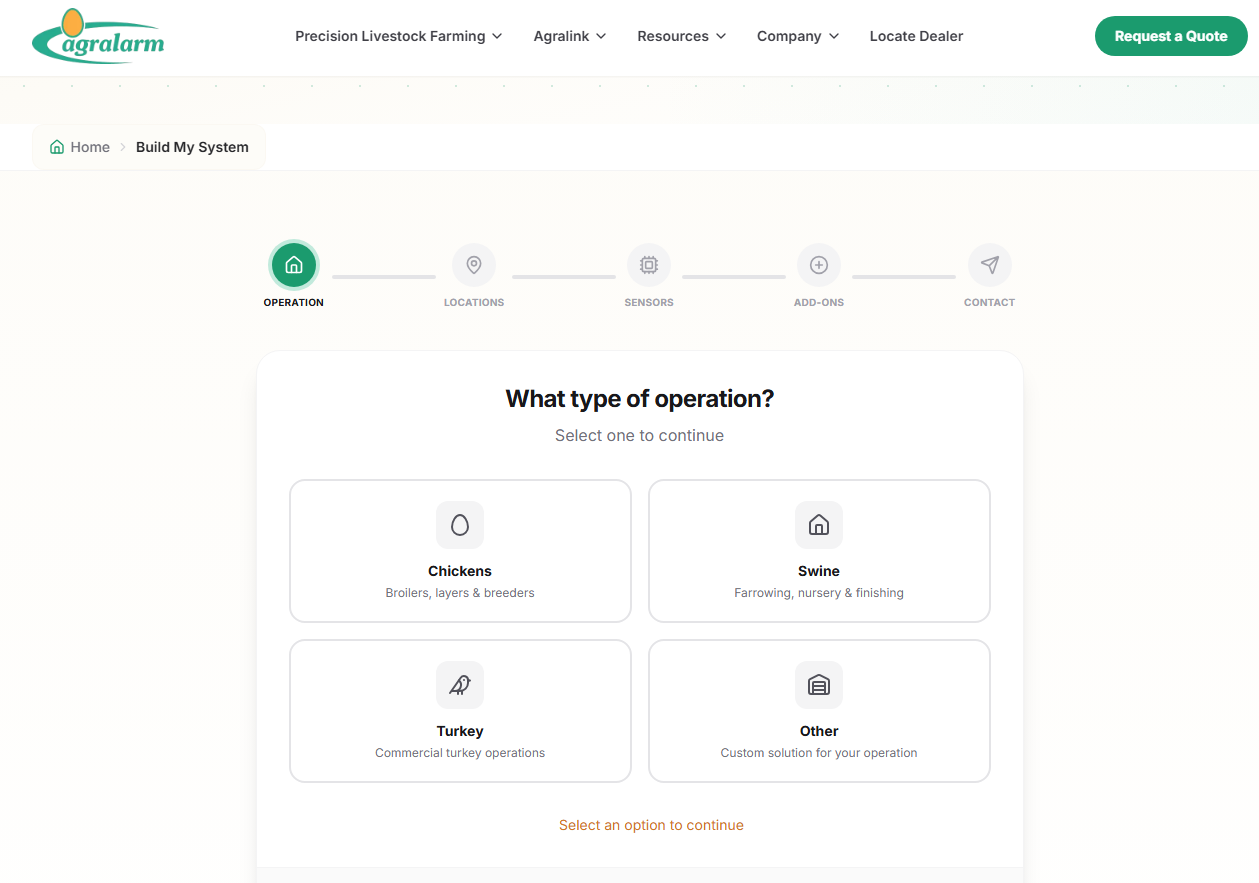
Building your own poultry and swine alarm system, means choosing the number of locations, type of sensors per house and any add-ons. These choices matter because bird and hog loss can happen within minutes of a temperature increase or ventilation failure. A poultry and swine alarm system can check temperature, humidity, feed bin levels and water meter in real time, giving growers the response window needed to protect their livestock.
Building your own poultry and swine alarm system, means choosing the number of locations, type of sensors per house and any add-ons. These choices matter because bird and hog loss can happen within minutes of a temperature increase or ventilation failure. A poultry and swine alarm system can check temperature, humidity, feed bin levels and water meter in real time, giving growers the response window needed to protect their livestock.
Most growers have the experience of walking into a barn to discover something overnight went wrong. Urgency is exactly why growers are moving away from standard Amazon products and toward a poultry and swine monitoring / alarm system built and configured to reflect their specific operation.
Poultry and swine growers may have different types of risks, but they share the same core need. Real-time awareness of what is happening inside each building at every hour / minute of the day.
Industry Research Says it All
The industry research is consistent with the findings. A 2025 study published in Scientific Reports found that temperature, humidity, ammonia, and methane levels inside a livestock barn have a direct and measurable effect on animal health and farm economics. One of the key findings was that early warning systems can detect equipment failures, such as water meter breakdowns. This can help to protect the animals before it has devastating effects.
As we all know, speed is everything. Heat stress alone reduces body weight and egg production quality in poultry. In swine operations, a drop in barn temperature can elevate mortality risk in piglet pens within a single shift. The consequences are fast, and they scale with the size of the operation. Be sure to visit Agralarm’s article from August 5, 2026 “Preventing Heat Stress Losses in Swine Barns.”
A 2025 paper from the MDPI IoT journal (IoT = Internet of Things) found that most farms still rely on independent controllers for individual systems, with manual management of fans and curtains across the barn. They found that there has not been integration between these systems. Building your own system addresses all of that in one move.
The Environmental Numbers That Drive Every Decision
Understanding why growers take poultry and swine monitoring seriously is because of what the science says about thresholds. The table below pulls directly from peer-reviewed research published in 2025.
| Parameter | Optimal Range | Risk Threshold | Species | Source |
|---|---|---|---|---|
| Temperature | 18 to 24°C (broilers) | Above 27°C triggers heat stress | Poultry | Scientific Reports 2025 |
| Temperature | 20 to 22°C (piglets) | Below 16°C raises mortality risk | Swine | MDPI IoT Journal 2025 |
| Relative Humidity | 50 to 70% | Above 75% accelerates pathogen growth | Poultry & Swine | MDPI IoT Journal 2025 |
| Ammonia | Below 10 ppm (poultry) | Above 10 ppm endangers birds and workers | Poultry | Scientific Reports 2025 |
| Ammonia | Below 25 ppm (swine) | Above 25 ppm affects respiratory health | Swine | MDPI IoT Journal 2025 |
| Carbon Dioxide | Below 3,000 ppm | Above 5,000 ppm impairs immune response | Both | MDPI IoT Journal 2025 |
These numbers represent the point at which a normal day in the barn moves into a negative situation that ends up costing the grower money and places the animal welfare at risk.
Building Your Own Poultry Alarm System
Poultry barn temperatures can rise in a matter of minutes especially when ventilation systems fail.
Platforms like Agralarm let poultry growers select the specific sensors needed as well as a Dashboard that allows the grower to set alerts based on thresholds within their operation. In addition, feed levels, water supply, humidity and temperature are all tracked within a single online, real-time Dashboard. The right person gets the alert with the Call List, whether that is a text at 2am or a notification at 2 pm.
For the convenience of the grower, The Agralarm system integrates with MTech, keeping the integrator informed.
Building Your Own Swine Alarm System
Swine operations bring their own set of challenges. According to Environmental Monitoring and Thermal Data Analysis (MDPI Agriculture, 2025), piglets require warmer conditions than finishing hogs, which means a single barn can have multiple temperature areas. Ammonia thresholds for swine run higher than for poultry. If an ammonia spike is missed, it can cause animal respiratory health problems and worker safety.
Agralarm supports swine monitoring. This means growers can run a single animal operation, both animals or even transitioning from one to another using the same single monitoring system.
Seeing Everything from One Place
Building your own alarm system with Agralarm allows you to centralize your farm’s information. Rather than checking individual controllers barn by barn, a single monitoring Dashboard brings all your houses into a single view.
Temperature, ventilation, humidity, feed levels, and water supply for every house on a single to multiple locations can be monitored on the Dashboard. That kind of information can change how a farm manager makes day to day decisions. When something needs attention, the right person receives the alert, and if not available the alert goes to the next person in line. This ensures prompt attention to the matter at hand.
The Compliance Record That Writes Itself
Many poultry and swine operations work within integrator requirements that include documentation of environmental conditions. Auditors want current records while integrators want data. A poultry and swine monitoring system that logs sensor data automatically and exports reports is an advantage of the Agralarm system.
Multiple Studies All Agree, Technology is Essential to the Modern Farm
Research from Scientific Reports, the MDPI IoT journal, and ResearchGate all point toward the same solution profile for modern livestock monitoring.
- Real-time sensing
- Automated alerts
- Centralized control
- Wireless designs that make deployment flexible and scalable across farms of any size.
A System that Grows with the Operation
An advantage of building your own poultry or swine alarm system with Agralarm is that it grows with the farm. Start with one barn and the sensors that matter most right now. Add coverage as the farm operation expands. Then, make adjustments to the alert thresholds as you learn what your animals and houses respond to over time.
Agralarm's Build My System model lets farmers put together a monitoring system that works with your current farm configuration while leaving room to expand. The Dashboard, that can be seen on a mobile device, tablet and desktop will report and graphically show the data, alerts, and records. The grower gets to focus on what they do best: make decisions that only they can make.
A Few Questions to Think About Before Getting Started
Before building your own poultry or swine alarm system, growers find it helpful to work through a handful of questions to ask first.
- How many barns need coverage right now?
- What are the most time-sensitive environmental risks in your farm? If more than one location, are the needs the same or different?
- Who on the team needs to receive alerts? Does it differ by house? Farm?
- Do your integrators or auditors require documentation or data?
- What is a realistic response time for your team when an alert comes in after hours?
The answers to those questions develop sensor choices and alert configuration. A poultry or swine alarm system built around these answers fits the operation it is meant to serve.
What Comes Next?
Building your own system is about giving your team the information they need, at the moment they need it, to make the right decision for the chickens, turkeys and swine in their care. Build Your Own System now or call us at 888-968-2802.
More Articles
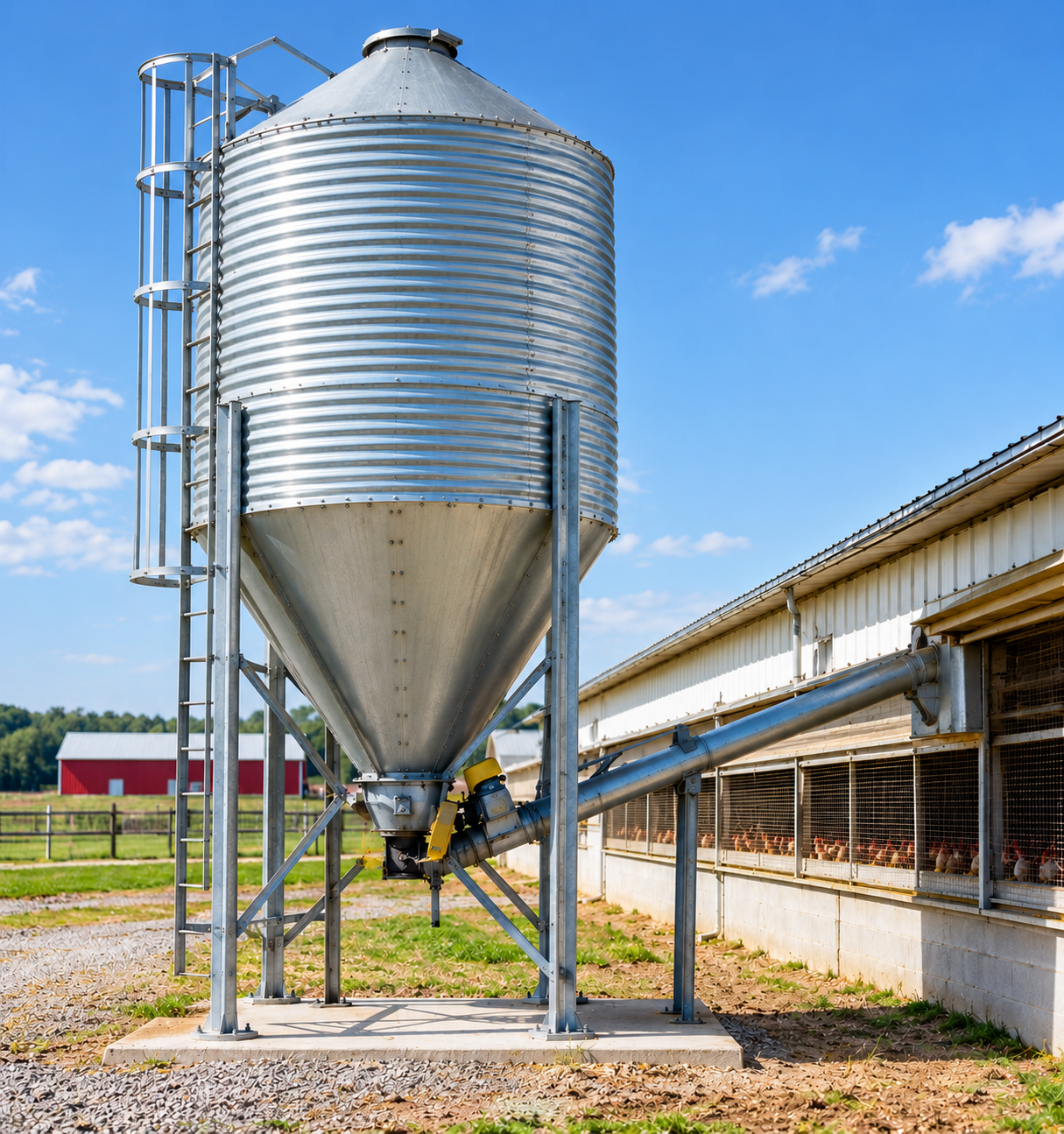
Feed Bin Monitoring Gives Growers Control Over their Biggest Cost
Let’s focus on feed bin monitoring. It’s one of the largest investments you’ll make on the farm. Wouldn’t you like to maximize those costs so nothing goes to waste? So we’re all on the same page, let’s first discuss what feed bin monitoring is.
How Much a Swine Farm Can Lose Before an Alarm Goes Off

How Agralink Keeps Your Broilers, Layers and Breeders Safe Around the Clock
One of the most comprehensive commercial poultry alarm systems is Agralink. Agralink keeps your broilers, layers and breeders safe. It is a remote monitoring platform delivering real-time SMS and voice alerts the moment temperature spikes, ventilation fails, water pressure drops, or the power goes out. From any device, growers gain full visibility across your barns from a single, online dashboard with current and historical data to improve performance over time.
Learn More About Agralink
See how Agralink's smart farm technology can support your operation.