A Barn Alarm Maximizes Your Poultry and Swine Assets. Here’s How.
What is Agralink by Agralarm? Trusted by thousands of farms, Agralink is a real-time wireless alarm and monitoring system for poultry and swine. The system primarily uses IP-67 rated sensors and cellular connectivity to track real-time temperatures, feed bins levels, water usage, power status, and humidities. Agralink also provides mobile alerts when assigned thresholds are breached.
The Quick Answer
What is Agralink by Agralarm? Trusted by thousands of farms, Agralink is a real-time wireless alarm and monitoring system for poultry and swine. The system primarily uses IP-67 rated sensors and cellular connectivity to track real-time temperatures, feed bins levels, water usage, power status, and humidities. Agralink also provides mobile alerts when assigned thresholds are breached. Let’s take a look at how a barn alarm maximizes your poultry and swine assets.
Why Temperature Costs Producers Millions
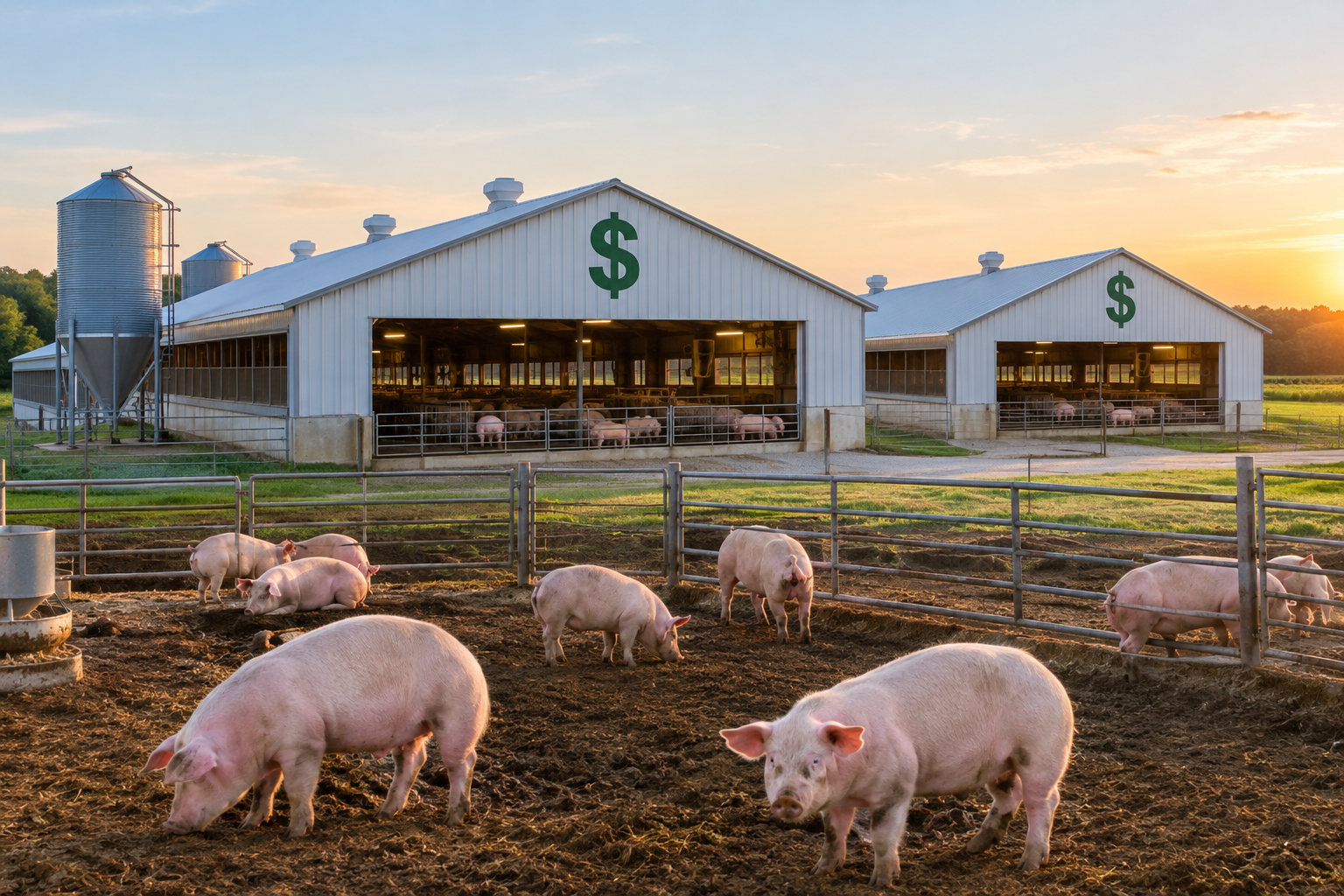
Let’s first talk about why you are learning about barn alarms. You know that your poultry and/or swine are the revenue for your business. When conditions change, the lives of the animals are at risk.
In poultry farms, heat stress alone costs the U.S. industry an estimated $128 to $165 million annually. This figure has been confirmed in peer-reviewed literature, including research from the University of Maryland Extension.
For swine producers, the losses are even more. Findings in research conducted by Dr. Steve Pollmann of the Smithfield's Hog Production Division, found that heat stress costs the American swine industry an estimated $900 million per year!
A fan breaking down on a hot day or a heater going out on a winter night; simple things, big costs. If you knew in time, would that make a difference? Yes.
Animals are Sensitive to Small Changes in Temperature
For broilers, the range where birds maintain body temperature without using energy to do so is approximately 60°F to 75°F, according to the University of Minnesota Extension. As barn temperatures climb at about 85°F, birds slow down their eating. By 100°F, body temperatures start rising and birds start dropping.
According to Mississippi State University Extension research, a broiler chick's body temperature can drop to around 73°F before death in cold temperatures. In the first week of life, it’s critical to maintain the temperature in the barn as baby chicks cannot maintain their own body heat for the first week of life. So, if a heater fails, this becomes an emergency situation.
For baby swine, the situation is similar. Research published in the journal Animals notes that pre-weaning mortality averages over 17.6% in U.S. swine operations, with more than 80% of deaths occurring in the first three days of life. A consistent temperature is what they need.
What the Research Shows
Based on research, we know that the range of tolerance for poultry and swine is a narrow window. How can you protect your farm’s most valuable assets? A barn alarm maximizes poultry and swine assets. Agralink.
What Does Agralink Do?
Agralink is a wireless monitoring and alarm system built specifically for poultry and swine.
The gateway is the central point of contact where sensor data gets fed into and is directed to the cloud for analysis. Sensors connect wirelessly to the gateway and are the data gatherers for critical areas such as temperature, humidity, feed bin levels, water flow and power status. Agralink constantly watches for if the sensor data goes too high, too low, too slow, too fast, and more! You will know immediately, in real time.
There is no WiFi to worry about. Instead, it runs on a dual redundant cellular network, giving you reliable connectivity.
The Multi-Platform Dashboard System
Access to your dashboard system goes with you wherever you need to go; whether it be on your mobile phone, tablet, laptop or home / office desktop computer. Each shows the same real-time analysis and data whenever you want 24/7. Get current readings, alert history, and device status for every sensor on the poultry and swine monitoring system. For multi-site farm operations, this means a real-time overview of everything from a single screen. Now you can maximize your assets by making smart decisions regardless of where you are at.
Which Sensors are Important to You?
Farms are not known for their cleanliness, that’s why the Agralink system has proven sensors that are IP-67 rated and battery-powered. IP67 means these sensors are designed to withstandthe harshest of environments. This is important as farms regularly have pressure washing, condensation, and temperature changes going on. The sensor and battery design means it can go practically anywhere and monitor your farm assets. Let’s take a look at a few sensors from Agralink’s ever growing selection:
Temperature Sensor
Accurate real-time temperature readings with customizable alert thresholds. Get alerted anytime the temperature goes above or below your set limits.
Temperature & Humidity Sensor
Humidity can be difficult on poultry and swine. High moisture in the air reduces a bird's ability to lose heat through panting, making heat stress a higher risk. Get alerted when the temperature and/or humidity levels go above or below the thresholds you set. This two in one sensor combo reduces upfront costs and reduces maintenance.
Feed Bin Sensor
Feed bin sensors are critical to know how much feed to have each day. Our LiDAR based level monitoring system lets you know where your feed level is at. This gives you the control you need to make sure feed deliveries are on time.
Dry Contact Sensor
Monitors up to three digital inputs simultaneously. Connect controllers, power status indicators, relay outputs, reducing the amount of hardware needed on your farm.
Water Meter Monitoring
Connects to existing water meters via dry contact sensor. Ask us if you have a pulse output, we can make your water meter monitoring smart!
Agralink Sensor Specifications
| Sensor | Technology | Channels | Primary Use Cases | IP Rating |
|---|---|---|---|---|
| Dry Contact | Wireless/Cellular | 3 (digital inputs) | Power status, controllers, relay outputs | IP-67 |
| Water Meter (via Dry Contact) | Pulse input | Connect 3 water meters to 1 dry contact | Waterers, leak detection | IP-67 |
| Temperature | Wireless/Cellular | 1 (temp) | Broiler barns, poultry barns, swine, cold storage | IP-66 |
| Humidity | Wireless/Cellular | 1 (RH%) | Poultry barns, swine, grain storage | IP-66 |
| Feed Bin | LiDAR (non-contact) | 1 (level %) | Swine barns, poultry | IP-5X |
Why LiDAR for Feed Bin Monitoring?
Agralink's bin sensor uses LiDAR (light detection and ranging): LiDAR is a key solution for feed bin monitoring as it provides a highly accurate, real-time volume measurement. It works with the use of a laser bouncing off the feed surface. It reads the level of the feed without contact. Now you can check on the feed levels on your Dashboard and order it ahead of time or just in time.
Connectivity Supervision: For a Complete Uptime Farm Monitoring System
Here's a problem most farm alarm systems don't solve. What happens when the alarm itself goes offline? When will you find out?
A basic temperature monitor that loses its cellular connection stops sending alerts. The poultry or swine barn temperature could climb up or down to unfavorable conditions and your phone never rings or buzzes. You find out what happened when you drive in the next morning. At that point, it’s too late.
Agralink solves this problem with built-in connectivity supervision across three layers.
Device Monitoring
Every sensor's connectivity is continuously tracked and reported. If a sensor stops checking in, the system provides an immediate, real-time notification. You’ll always know the status of every sensor on your farm.
Gateway Health
The cellular gateway reports its own uptime, signal strength, and network status. You can see at a glance whether the gateway is communicating normally, what its signal strength looks like, and if it's online.
Network Supervision
If the cellular connection stops working due to a severe storm, or a carrier outage, Agralink will log the outage via a gateway offline alarm. When the connection restores, you’ll receive an immediate notification.
This notification allows you to take action to ensure your most important assets, poultry and swine, are tended to.
Agralink vs. Other Monitoring Approaches
Farm alarm technology spans a wide spectrum. Here's a comparison of older, dated systems, and where we are at today.
Monitoring Approach Comparison
| Feature | Legacy Autodialers | WIFI Based Systems | Agralink (Cellular) |
|---|---|---|---|
| Connectivity | Landline telephone | Farm Wi-Fi / internet | Cellular — no Wi-Fi needed |
| Remote access | None | App (dependent on internet) | Dashboard on phone, tablet, laptop, desktop |
| Sensor types | Temperature only (typically) | Varies by brand | Temp, humidity, feed, water, power |
| Connectivity supervision | None | Rarely Included | Built-in across all layers, Dashboard |
| Installation | Wired — usually professional | DIY to professional | Fully wireless, installed by proven & credible Dealers |
| Rural reliability | High (landline) | Low (requires stable internet) | High (cellular coverage) |
| Multi-site visibility | Not Available | Sometimes | Yes! Dashboard on phone, tablet, laptop, desktop |
Reliability is what every farm owner and worker expects from a farm alarm system. That’s why cellular coverage is the most reliable way to go as it provides consistent coverage delivering vital information when and where you need it.
Frequently Asked Questions
Does Agralink require internet or Wi-Fi at the barn?
No. The farm monitoring system runs on cellular networks. The gateway communicates directly with the Agralink cloud platform over cellular.
What happens if the cellular connection goes down?
Agralink's built-in network supervision detects the connectivity loss and logs it. When connectivity restores, you receive an immediate notification. You have a record of when the system was and wasn't connected.
How does the LiDAR feed bin sensor handle different feed types?
Because the sensor uses a laser rather than physical contact, it reads accurately regardless of feed types.
Can I monitor multiple farms from one Dashboard?
Yes. Multiple gateways across multiple sites all report into the same Dashboard.
What does IP-67 mean and why does it matter?
IP-67 means the sensor is fully protected against dust and can withstand temporary water immersion. In a barn environment where pressure washing, condensation, and temperature changes are the norm, this rating means the sensor keeps working without needing a protective enclosure.
Can I connect my existing water meters to Agralink?
Yes. Water meters connect by the dry contact sensor.
How long do the sensor batteries last?
Battery life varies by sensor type but generally lasts a couple of years. Agralink's connectivity supervision tracks each sensor's status. You'll be notified in real-time with any changes.
More Articles
Why Growers Who Build Their Own Poultry and Swine Alarm Systems Are Ahead of the Curve
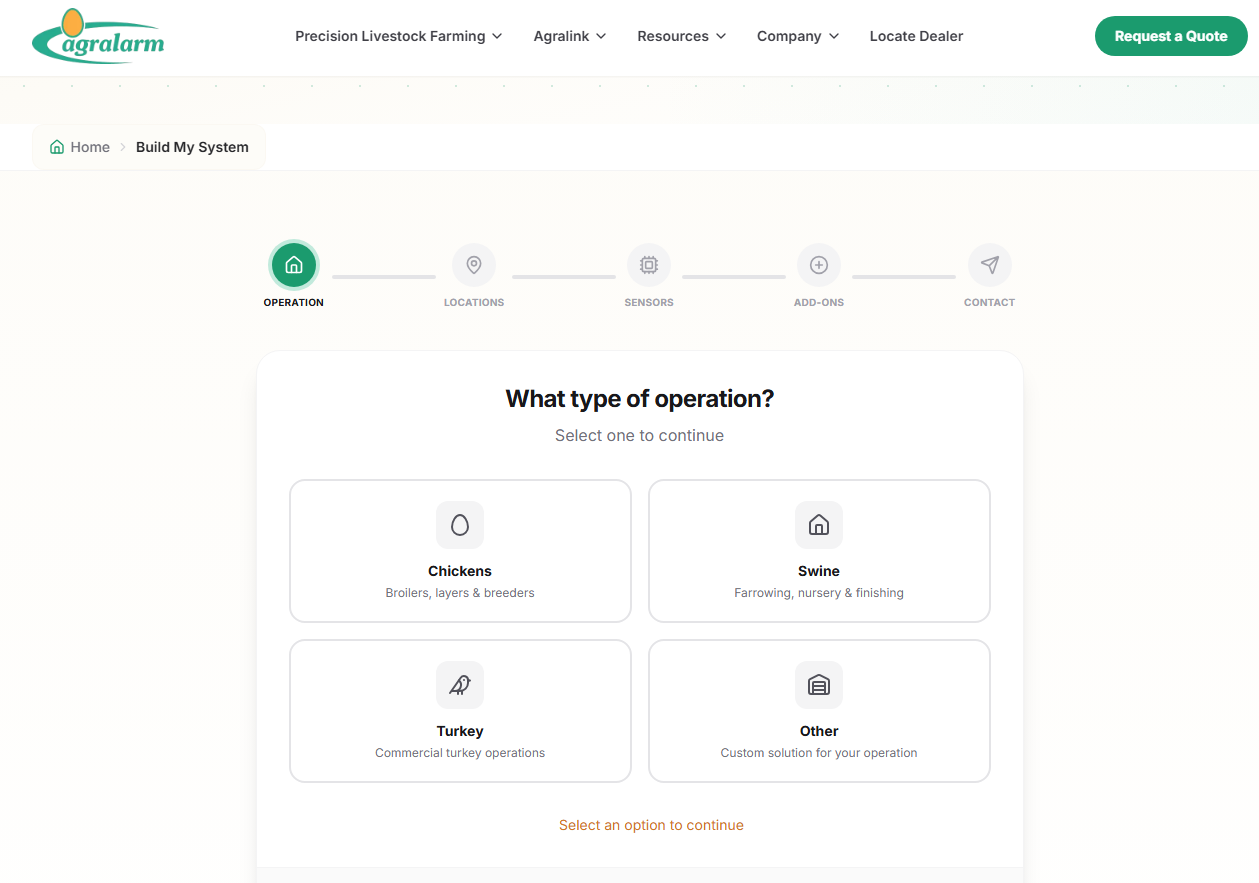
Building your own poultry and swine alarm system, means choosing the number of locations, type of sensors per house and any add-ons. These choices matter because bird and hog loss can happen within minutes of a temperature increase or ventilation failure. A poultry and swine alarm system can check temperature, humidity, feed bin levels and water meter in real time, giving growers the response window needed to protect their livestock.
Feed Bin Monitoring Gives Growers Control Over their Biggest Cost
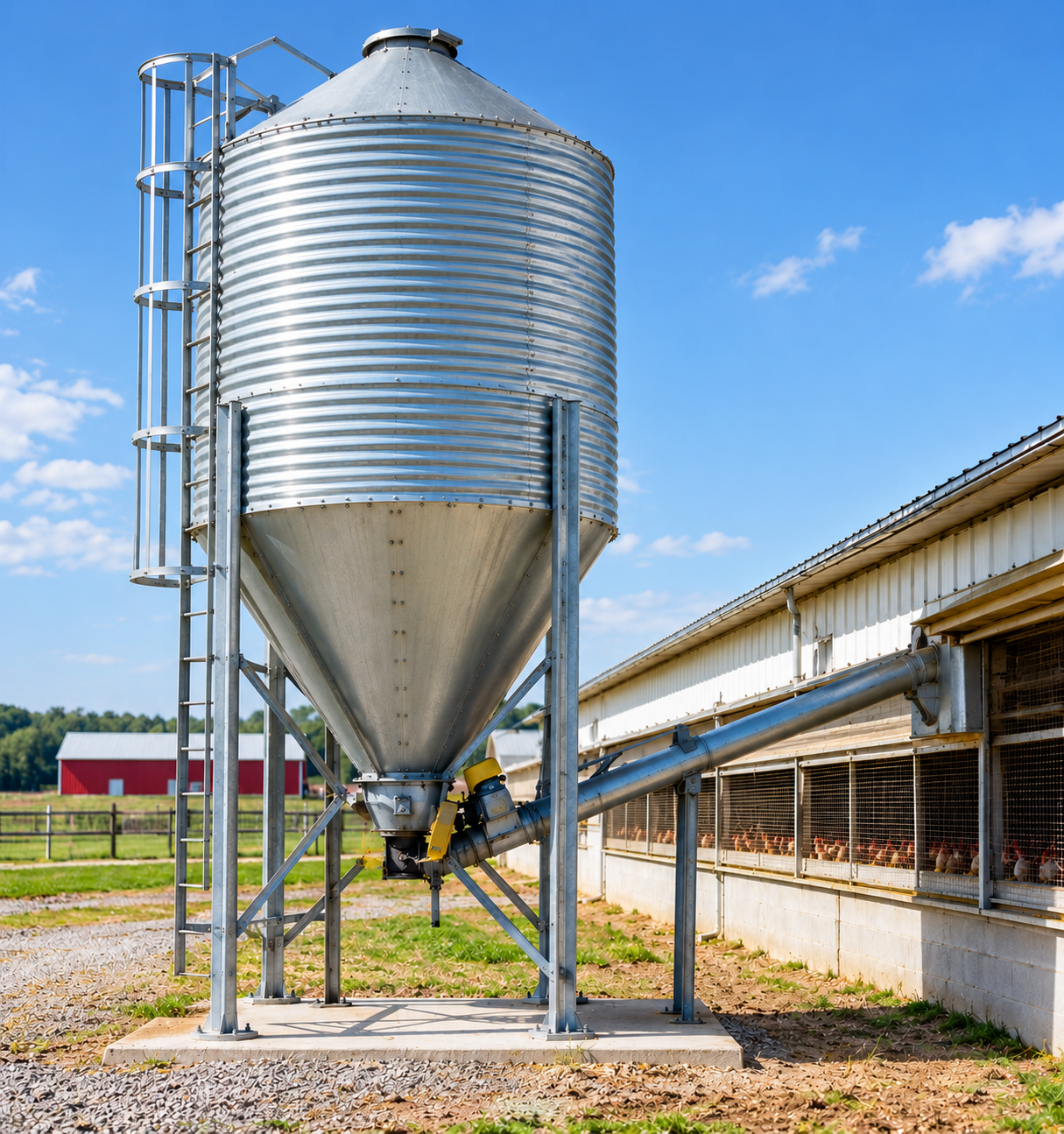
Let’s focus on feed bin monitoring. It’s one of the largest investments you’ll make on the farm. Wouldn’t you like to maximize those costs so nothing goes to waste? So we’re all on the same page, let’s first discuss what feed bin monitoring is.
How Much a Swine Farm Can Lose Before an Alarm Goes Off
Learn More About Agralink
See how Agralink's smart farm technology can support your operation.