Turkey House Monitoring Prevents Heat Stress, Ventilation Failure, and Flock Loss
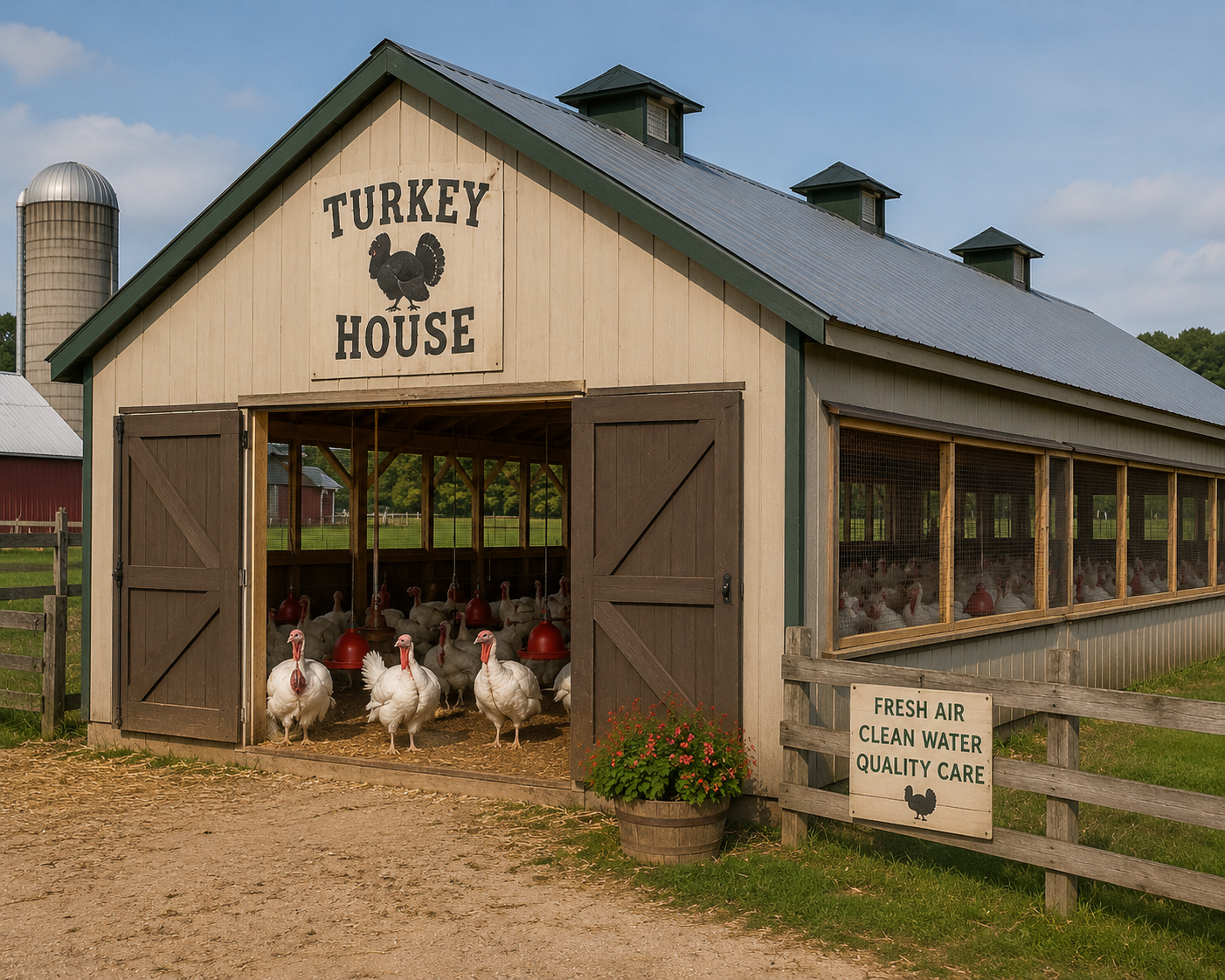
Turkey house monitoring uses sensors to track temperature, humidity, ventilation, water flow, feed levels, and power status in real time, sending instant SMS or voice alerts when conditions cross a threshold set by the grower.
Turkey house monitoring uses sensors to track temperature, humidity, ventilation, water flow, feed levels, and power status in real time, sending instant SMS or voice alerts when conditions cross a threshold set by the grower. These instant alerts allow the grower, or users on their configurable call list, to have rapid response time to critical issues. If these notifications are late, do not go through in time, or simply never get created, the grower could discover a turkey house full of deceased birds by the time they get to the farm.
Why Turkey House Monitoring Matters
Turkeys and heat do not mix, unless it's Thanksgiving. Their body mass, along with dense feathering, means that their ability to eliminate heat is minimal, making rises in temperature quickly deadly. Other scenarios, such as a single broken fan or a burst water pipe, can easily lead to increased bird mortalities, or even property damages. It does not take much to cause problems that echo throughout the supply chain.
Unlike broiler houses, which have benefited from a wave of automation investment over the past decade, many turkey operations still rely on personal walkthroughs every few hours. The time between checks is where risk resides, and where Agralarm’s Agralink works to prevent loss.
Environmental Risks in a Turkey House
| Risk Factor | Why It's Dangerous | What to Watch For |
|---|---|---|
| Heat Stress | Turkeys have poor heat dissipation, making them highly susceptible to temperature spikes | Critical above 85°F |
| Humidity Imbalance | Impacts bird health and litter quality throughout the growing cycle | Deviation from your house's normal range |
| Power Outage | Fans, feed lines, and water system breakdowns at the same time | Seconds count for backup activation |
| Water Flow Interruption | Can signal a line break, valve failure, or supply issue | Seconds count for backup activation |
| Ventilation Failure | Stops airflow and heat/ammonia removal; compounds every other risk | Minutes matter once fans stop |
How Real-Time Monitoring Changes the Response Timeline
Regularly scheduled turkey house checks are great, but leave opportunities for problems to happen. Turkey house monitoring systems continuously check conditions and process alerts when thresholds, configured by the grower, have gone above or below the settings. When a threshold violation occurs, the monitoring system automatically contacts the list of responsible people (call list) to immediately check the conditions. If the first person acknowledges the alert, the responsibility rests with that person. If that person fails to care for the issue, the monitoring system will provide the details of: who acknowledged, what happened, when it happened, and where it happened.
Detection Speed
Any alerts are immediate, as time is of the essence. Sensors are constantly monitoring, and don’t get distracted. Their only job is to monitor conditions to ensure the health and well being of your assets, the turkeys.
Response Consistency
Instant alerts mean the person best positioned to respond gets notified first. Custom call lists let operations assign different notification sequences by location, so a night-shift issue at House 4 reaches the right person even if the primary manager is off that week.
Compliance and Recordkeeping
Historical sensor data also supports integrator reporting requirements and internal performance reviews, turning what used to be minor observations ("House 3 always seems to run a little humid") into documented, trend based insights.
What a Modern Turkey House Monitoring System Covers
Not all farm monitoring configurations are designed the same way. A turkey house monitoring system designed specifically for commercial turkey production, can cover the following from a single Dashboard:
Temperature Monitoring
Multi-zone temperature sensing with custom thresholds per house, since growth stages can have different comfort ranges.
Humidity Tracking
Humidity affects the bird’s respiratory health. Any ongoing imbalance may be a slower risk than heat stress, however it does affect how much the turkey eats and the development of physical problems.
Ventilation and Airflow
Fan operation monitoring catches various types of mechanical failures such as a motor or electrical problem before it translates into a temperature spike from a shutoff fan.
Power Status
Because fans, feed, and water pumps often run on the same electrical circuits, a power outage is one of the most common and critical problems on a farm. Outage detection allows farmers to take action instead of waiting for someone to notice the lights are off.
Water Flow
Water meters connected to the monitoring platform catch line breaks, valve failures, or supply interruptions remotely, before birds show signs of dehydration.
Feed Run Times
Feed lines often need to run for specified amounts of time and on regular intervals. Getting alerted when a feed line has run too much can save on wasting expensive feed, or more importantly, knowing when a feed line has not run recently. When birds are not eating, they are not growing.
Feed Bin Levels
Knowing the feed bin level helps to determine when to order more feed and if the birds are eating more or less over a given period of time. LiDAR-based bin sensors can track fill percentage within about 6% accuracy of load-cell systems. Solar power and 5-minute update intervals mean growers can schedule deliveries with more accuracy than estimating based on delivery history.
Sensor Categories at a Glance
| Monitoring Category | Sensor Type | Update Frequency | Key Benefits |
|---|---|---|---|
| Temperature | Multi-zone probes | Continuous | Early heat stress detection |
| Humidity | Environmental sensors | Continuous | Litter quality management |
| Ventilation | Fan/airflow sensors | Continuous | Mechanical failure detection |
| Power | Dry contact / relay sensors | Instant | Outage response triggering |
| Water | Inline flow meters | Continuous | Leak and interruption detection |
| Feed | LiDAR bin sensors | Every 5 Minutes | Delivery scheduling accuracy |
Integration with Existing Barn Controllers
One of the biggest practical barriers to adopting environmental monitoring is the assumption that it requires ripping out existing equipment. In most cases, it does not.
Dry contact sensors can connect directly to the alarm relay output already present on most commercial barn controllers, including systems from Cumberland EDGE, Chore-Time, Hired Hand, Rotem, and Agrivent. Any controller with a dry contact alarm relay output is compatible, meaning the monitoring layer sits on top of existing infrastructure rather than replacing it.
This matters for return on investment. Growers aren't choosing between their current controller and a monitoring system, they are adding a layer of visibility and alerting on top of equipment they've already paid for.
Hardware Considerations: Why IP67 Ratings Matter
Turkey houses are challenging environments for electronic equipment. Challenging conditions such as dust, ammonia, moisture, and temperature swings can degrade unrated hardware fast.
Sensors rated IP67 are sealed against dust and can withstand temporary submersions. This means these sensors can tolerate power-washing, condensation, and basic grime without failing prematurely. When evaluating any monitoring system such as Agralink, hardware rating is one of the first specifications worth checking.
Building a Turkey House Monitoring Program Checklist
1. Identify which houses currently rely only on manual walkthroughs and which have the longest gaps between checks. 2. Prioritize houses by risk. Are your turkey houses in hot climates? Identify other high risks that can cause problems. 3. Check (or we can check for you) whether your existing controllers have a dry contact alarm relay output before assuming a full system replacement is needed. 4. Set realistic thresholds. Thresholds should reflect the best conditions of the turkey at every stage. 5. Assign a call list of responsible individuals. Alerts are only useful if they reach someone who can act. Build notification sequences by house and by time of day. 6. Review historical data monthly. Trend data can reveal slow-moving issues before they become actual problems and affect your assets.
Frequently Asked Questions
Q: Do you integrate with MTech? Agralink has direct integration with MTech
A: Systems, which strengthens real-time visibility across grower operations, helping the integrators streamline decision making, reduce risk and control supply chain costs.
Q: Can feed bin levels really be monitored without load cells?
A: Yes. LiDAR-based sensors can reach accuracy within about 6% of load cell systems while working across different bin shapes. Agralink uses solar power and updates every five minutes.
Q: Do I need to replace my current barn controller to use Agralink? A: No. Agralink is designed to layer on top of the equipment you already have, not replace it. The dry contact sensor plugs into the alarm relay output that's already built into most controllers. This saves the farmer money on investments already made.
Contact us to learn more about turkey house monitoring today!
More Articles
Why Growers Who Build Their Own Poultry and Swine Alarm Systems Are Ahead of the Curve
Building your own poultry and swine alarm system, means choosing the number of locations, type of sensors per house and any add-ons. These choices matter because bird and hog loss can happen within minutes of a temperature increase or ventilation failure. A poultry and swine alarm system can check temperature, humidity, feed bin levels and water meter in real time, giving growers the response window needed to protect their livestock.
Feed Bin Monitoring Gives Growers Control Over their Biggest Cost
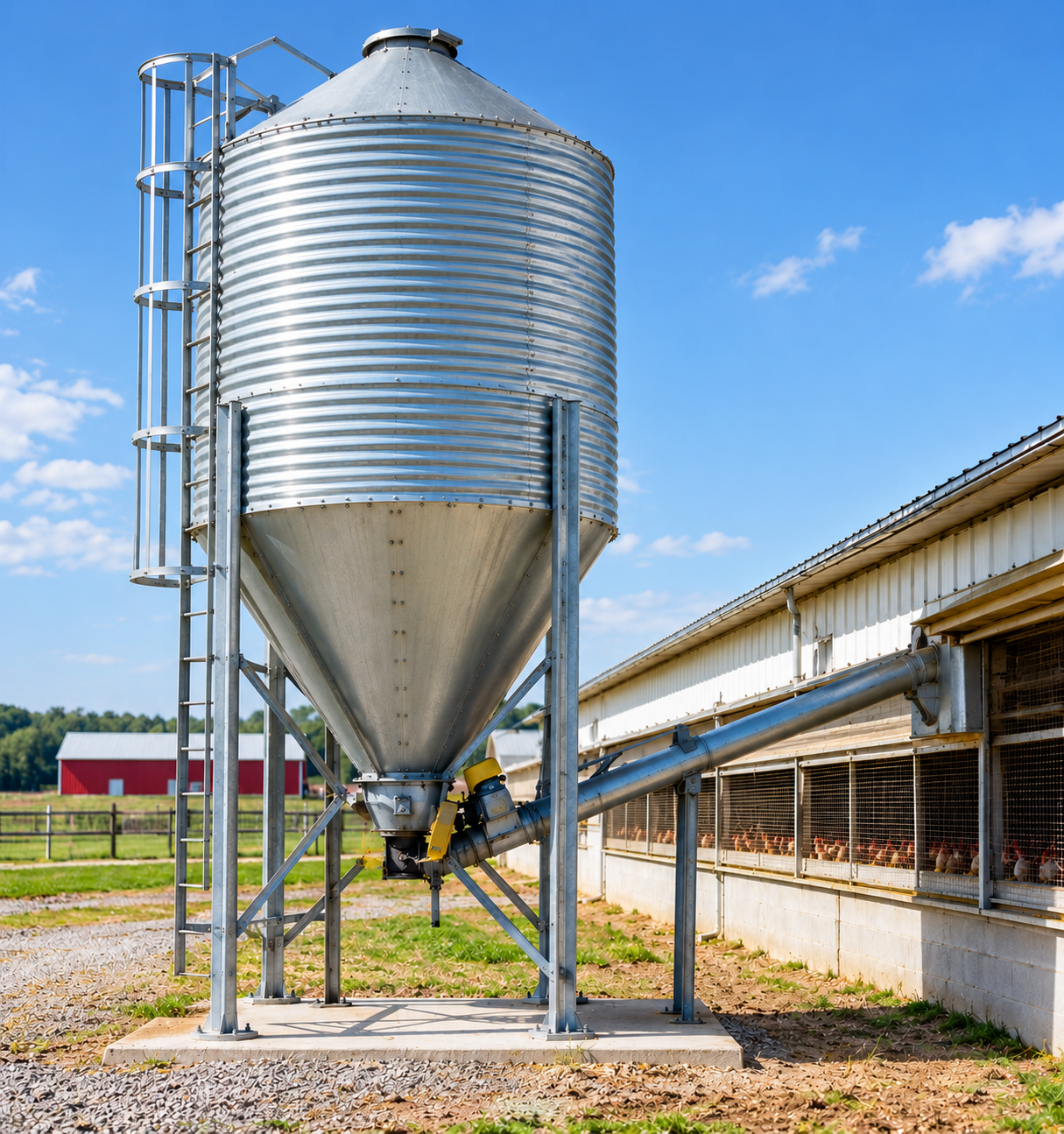
Let’s focus on feed bin monitoring. It’s one of the largest investments you’ll make on the farm. Wouldn’t you like to maximize those costs so nothing goes to waste? So we’re all on the same page, let’s first discuss what feed bin monitoring is.
How Much a Swine Farm Can Lose Before an Alarm Goes Off
Learn More About Agralink
See how Agralink's smart farm technology can support your operation.